vendredi 18h-19h30 à Mixage, Mens, salle expression (1er étage)
Bonjour à toustes !
Avec un grand plaisir, je vous annonce qu’il y aura, chaque vendredi de 18h à 19h30,à Mixage, un atelier de danse/mouvements pour adultes (tous niveaux bienvenus!):
certains cours (ou partie du cours) auront plus une tendance danse improvisation, avec des jeux sur l’espace, le rythme, les relations les uns aux autres, différentes qualités de mouvement, des propositions inspirées du Body-Mind Centering® (cf ci dessous) etc.,
et d’autres cours auront une tendance contact improvisation (cf petite définition ci dessous).
Solène et Joe seront les enseignants principaux de cet atelier.
vous pouvez venir à l’atelier, ou prendre une carte de 6 cours, ou bien vous engagez sur l’année.
vendredi 18h-19h30 à Mixage, Mens, salle expression (1er étage)
tarif découverte, pour toutes les bourses:
– 12€/coursde 1h30 sans engagement
– 9€/coursde 1h30 pour la carte de 6 ateliers
– 8€/coursde 1h30 pour un engagement sur l’année
+ 2€d’adhésion en ponctuel,5€au trimestre ou10€à l’année
L’espace étant limité, le nombre de place l’est aussi, merci de prévenir de votre venue autant que possible,
Merci! Au plaisir de se mouvoir ensemble !
Solène 06 14 45 25 39 et Joe 06 45 43 48 78
nos parcours , à lire en fin de mail
Le Contact-improvisation :
Le Contact Improvisation pourrait se définir comme une danse-sport, qui vient d’un jeu de contact physique, de perception et de partage d’un centre de gravité avec un partenaire. Historiquement issu de l’aïkido et de la danse contemporaine, il offre une forme expressive, par laquelle nous permettons à nos créativités de s’écouler et de former un autre type de dialogue avec un ou plusieurs partenaires.
Le Body-Mind Centering®
appartient au champ de l’éducation somatique, qui regroupe des méthodes ayant en commun de travailler avec le corps vécu et vivant pour le rendre plus sensible, plus conscient. Le BMC® nous invite à bouger, à créer, à exprimer. Cette approche originale, née de la recherche de Bonnie Bainbridge-Cohen aux Etats-Unis, aborde l’étude de l’anatomie, la physiologie, l’embryologie, par le mouvement, le toucher et la voix, permettant de ressentir différentes qualités de présence et d’expressions.
De nouveaux chemins de mouvement se créent!
Solène Dubreuilest passée par un cursus contemporain et classique au conservatoire de Lyon, et a eu beaucoup de plaisir à explorer par la suite l’improvisation, le contact improvisation et le Body-Mind Centering® (BMC®), avec une trentaine d’enseignants différents, en France et à l’étranger. Elle a aussi fait partie de petites compagnies de danse sur Lyon puis Grenoble. Elle est enseignante en danse, kinésithérapeute, praticienne en soin Rebozo et éducatrice en développement moteur du nourrisson certifiée par l’école internationale de BMC®. Elle est aussi nourrie par d’autres pratiques comme le Mouvement authentique, le Qi Gong, le yoga.
Joe Stoller étudie, créer et enseigne le contact improvisation depuis 1998. Il a fait un an de recherche internationale soutenu par une bourse Watson en 2003. Il a aidé à lancer la pratique de CI à Grenoble (Chorescence), et a beaucoup dansé avec le «Collectif de CI Tumblebones» à Boulder (USA). Joe est également instructeur de Shengzhen Qigong et praticien de la Méthode Feldenkrais®.
La montée et la descente, le lâcher prise et le décollage, le déplacement au-dessus et en-dessous de nos partenaires de danse font tous partie de la fascinante communication que nous explorons en contact improvisation. Les dynamiques du squelette, la masse, la direction vers la facilité et le plaisir : quand nous apprenons à clairement sentir et initier le mouvement à partir de ce que nous sentons en nous-mêmes et dans nos partenaires, les portes s’ouvrent, une danse est co-créée.
Cet atelier est ouvert à tous les niveaux ; on développe, de manière ludique, des compétences essentielles de danse contact improvisation qui peuvent être adaptées à d’autres formes de danse, d’arts martiaux et de travail somatique.
Inscriptions Toute inscription sera validée dès réception d’un email ou fiche d’inscription et d’un chèque d’arrhes d’un montant de 40€ou de la totalité du stage
Un art du mouvement basé sur l’écoute sensoriel de soi, de l’autre, de l’environnement et de l’instant présent.
Le Contact Improvisation pourrait se définir comme une danse-sport, qui vient d’un jeu de contact physique, de perception et d’articulation du mouvement. Il offre une forme expressive, par laquelle nous permettrons à nos créativités de s’écouler et de former un autre type de dialogue avec un ou plusieurs partenaires.
le 7 et 8 octobre 2017(week-end complet conseillémais possibilité de venir l’un des deux jours)
Lieu: Gymnase de St-Chaffrey,à côté de Briançon, Hautes-Alpes
Horaires: le 7:17h-20h ; Le 8: 10h-16h30
Tarif:45-60€ pour les 2 jours, selon vos moyens ; chèque d’arrhes de15 euros
Joe, explore le mouvement, le toucher et l’improvisation depuis 1998. Il a aidé à lancer la pratique de CI à Grenoble(Chorescence) en 2005 et a beaucoup dansé avec le « Collectif de CI Tumblebones » à Boulder, Colorado. Egalement praticien feldenkrais et enseignant de Qi Gong, il aime partager et transmettre tout en soutenant le chemin de chacun dans son exploration du mouvement.
Solène, formée au Conservatoire National de Région puislors de nombreux stages avec des personnes comme Nancy Stark Smith, Isabelle Uski, Chris Aiken, etc…en improvisation et contact-improvisation; a dansé dans différentes petites compagnies et enseigne aussi, avec beaucoup de plaisir!
Ce stage explore l’approche globale et efficace de la Méthode Feldenkrais pour surmonter les difficultés localisées telles que une douleur ou une raideur dans le dos, les épaules ou les genoux, . . . Bien que nous ressentons ces problèmes dans une partie localisée de nous-mêmes, ils font toujours partie d’un ensemble plus vaste et d’antécédents de compensation. Ce week-end se concentrera sur les principes d’équilibre et de connexion.
Prise de Conscience par le Mouvement :
Une séance « Feldenkrais » se pratique souvent couché pour se décharger des forces gravitationnelles. Elle est faite de suites d’exercices simples et variés expliqués oralement par l’enseignant.
ll n’y a pas de modèle à imiter, chacun exécute les mouvements en toute conscience, cherchant à apprendre des possibilités d’action plus respectueuses de son squelette et de son système nerveux.
Tout le monde a besoin de force, d’un axe fiable et d’une posture redressée pour relever les défis de la vie quotidienne, sportive, artistique.
Heures : 14 Octobre, 10h-13h et 15 Octobre, 15h-18h
(possibilité de s’inscrire pour 1 ou 2 jours)
Lieu : Les Portes Du Souffle 3, Rue du Docteur Vagnat, Vieille Ville,Briançon
Joerg et Joe partageront avec vous leur intérêt actuel à propos du Contact Improvisation et de l’éducation somatique. La base sera l’étude détaillée des mouvements de développement moteur par l’approche de la Méthode Feldenkrais, la connexion au sol et l’orientation sphérique. De là, Joe & Joerg nous guideront dans une exploration qui prendra en compte les intérêts découlant du groupe.
Joe sortira une «Grammaire de la spontanéité» de sa poche arrière – des motifs essentiels qui nous libèrent pour une expression spontanée. Joerg souhaiterait tisser une entrée technique pour des duos engagés avec partage de poids, entremêlée de découvertes autour de danses légères et sans contact.
Défis juteux, pratique de non-attachement et «plonger dedans» sont des états et des énergies qu’ils aimeraient favoriser.
Nous verrons où cela mènera…
Joerg et Joe ont partagé des danses et des rencontres de recherches très inspirantes et sont très intrigués par le cadeau d’enseigner ensemble.
Dates : Du 7 au 11 novembre , 6 heures par jour, 10h-18h
Prix flexible : 200 – 260€ pour le Stage
Lieu : Les Ailes de Bernard à Saint-Julien-Molin-Molette
Hébergement et Nourriture: auto-organisé.
Voici une liste des options d’hébergement et comment s’y arriver
Toute inscription sera validée dès réception de an email a stoller.joe@gmail.com et d’un chèque d’arrhes d’un montant de 80€ ou de la totalité du tarif, à l’ordre de Joseph STOLLER, 43B Route de Grenoble, 05100 Briançon. Merci d’inclure votre email, numéro de téléphone et d’où vous vient.
Joerg Hassmann s‘investi depuis plus de 25 ans dans un travail de recherche en danse improvisation et performance, qui ont amenés le Contact improvisation au centre de son métier et de sa pratique du mouvement. Des études d’anatomie, de danse contemporain, de Body Mind (BMC), de Capoeira, un sens profond du jeu et la joie de la découverte forment ses influences majeures. Ensemble avec Daniel Werner ils ont développé une approche systématique aux techniques du Cl (www.dancecontact. de). Joerg est directeur artistique du Festival de Cl “Contact Meets contemporary” a Göttingen depuis 2009. Il enseigne dans diffèrent festivals et stages en Europe. Dans son blog il Partage ses réflexions sur son travail (Joerghammann.wordpress.com).
Joe Stoller explore le mouvement, le toucher et l’improvisation depuis 1998. Son engagement avec CI comprend beaucoup de enseignement et une année de recherche soutenue par un Bourse Watson. En parallèle et tisser à l’enseignement du CI, Joe est également instructeur de Shengzhen Qigong, de la Méthode Feldenkrais®, et professionnel en shiatsu et massage. Son approche de l’enseignement encourage les processus de transformation et d’apprentissage; tout en maintenant un profond respect de la personne pour l’aider à trouver sa propre voie.
From the floor to flying
Joerg and Joe offer their current interests in Contact Improvisation and somatic education methods. A base will be the Feldenkrais Method’s detailed study of developmental movement patterns, connection with the floor and spherical orientation. From there Joe & Joerg will guide us into an exploration that takes the arising interests within the group into account. Joe has a “Grammar of Spontaneity” in his back pocket – Essential patterns which free us for spontaneous expression. And Joerg will weave technical input for committed, shared-weight duets into the journey and re-balance it with discoveries around light- and no-touch dances.
Sweet challenges, non-attachment practice and ‘going for it’ are states and energies that they’d like to foster.
We’ll see where it’ll go.
Joerg and Joe share highly inspiring dances and research encounters and are very intrigued by the gift of teaching together.
Nov 7th-11th, 6 hrs a day, 10am-6pm
Price flexible: 200 – 260€ for workshop
Location: Les Ailes de Bernard à Saint-Julien-Molin-Molette
lodging and food: — self organized.
Here is a list of options for lodging and how to get there (in French)
Inscriptions: All enrolment will be validated upon receipt of an email to stoller.joe@gmail.com and a deposit of 80€ or the full amount, payable to Joseph STOLLER, 43B Route de Grenoble, 05100 Briançon. Please include your email, phone number and where you are coming from.
Joerg Hassmann, dances, explores and teaches Contact Improvisation for more than 25 years; Artistic Director of the Contact Festival „Contact meets Contemporary“ Gottingen/ Germany; developed a systematic approach to CI-specific technique together with Daniel Werner, which they share in their training programs in Berlin and across Europe; anatomy based studies, contemporary dance, ideas from BMC (Body Mind Centering), Capoeira and a playful attitude in his explorations are his main influences.
Joe Stoller has been studying, creating and teaching movement, touch and improvisation since 1998. His engagement with CI includes extensive teaching and a year of research supported by a Watson Fellowship. His dancing and teaching blend with his ongoing work as a Qigong instructor, massage therapist and Feldenkrais® teacher. www.joestoller.com
So this is not something I have written, but it is worth the 4 minutes it takes to watch to understand a little bit about the effects of meditation and mindfulness.
It is worth noting that mindfulness is an integral part of the Feldenkrais Method, Qigong and Contact Improvisation
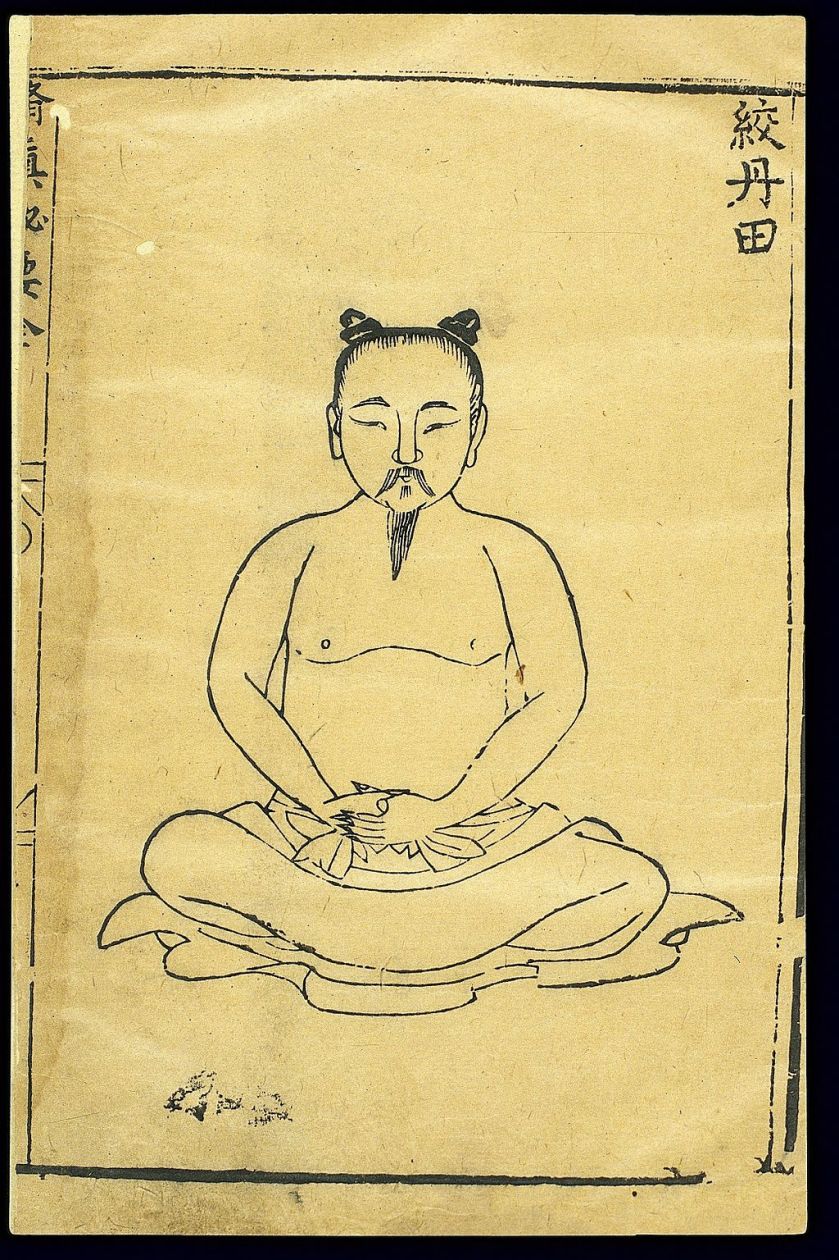
When I began studying Taiji Chuan my teachers would often refer to the dantien, an energetic and physical center residing in the area of the lower abdomen, near the center of gravity. Teachers said that proper engagement of the dantien is key to the practice of Taiji Chuan. At the same time, it was said that the practice of Taiji Chuan would build potency in the dantien. I worked with an idea of the dantien for years of practicing Taiji Chuan, but ended up stoping my practice. The practice had many benefits, so why stop? I felt more calm and energetic with a global feeling of being more unified or “centered”, but I found that after Taiji practice my knees would ache.
Dr. Moshe Feldenkrais, developer of The Feldenkrais Method®, pointed out a very important aspect of humans. In comparison to most animals, which are able to walk or even run just after birth, humans are learning animals. We take a long time to develop our ways of moving. Our development follows basic patterns, but our way of moving is always idiosyncratic. Our ways of moving may work pretty well, but they are rarely close to optimal. Essentially we learn a habitual way of doing things that comes to feel normal and natural even when these familiar habits of how we move cause pain or predispose us to injury.
Dr. Feldenkrais proposed a method to help people learn how they move, to unlearn habits and to develop a wider and more functional repertoire of movement. A key concept that he elaborated was the self-image. When we engage in any activity, we organize our movement to enact this particular image of how we are constructed and how our parts relate to each other and to the environment. The inaccuracy of the self-image leads to wear and tear on our tissues and limitations in how we relate to our environment. Take an example of someone who does not relate the movement of the torso and the arms to the mobility of the pelvis in the hip joints, they may consistently bend forward to reach for things by flexing the spine. Over time they begin to have pain in their back and feel less capable in their everyday life. Or in my case a conception of my dantien, that stressed my knees.
Following from this principle of clarifying the self-image, I have come back to the idea of the dantian through the Feldenkrais Method and further studies of Qigong, a close relative to Taiji Chuan. This is an integrated approach that engages both the local anatomy of the pelvic region and a holistic understanding of the dantien. It also uses the center as a unifying concept, which can knit together relationships between the pelvic region, breathing, the mind and functional movement of the whole person. While this article will give some “exercises”, my root intention is to transmit some of the foundational principles, and learning methods that elaborate how we can work with ourselves and with our students.
Commonilites
Despite their different histories Qigong and the Feldenkrais Method share a lot of common ground. Fundamentally, they are somatic approaches that develop qualities of inner harmony as well as harmony with the world.
Feldnekrais and Qigong use the attention and imagination in similar ways. While moving outwardly, we orient our attention to sense inwardly the aspects of ourselves involved in movement. In this processes we are implicitly using an image of our selves to both move and to localize our attention. As sensation is produced and consciously felt, we are able to clarify the image of our selves we are in the processes of enacting. The process of identifying, differentiating and relating are key to these methods of improving the harmonious, functional integration of ourselves with our environment.
Qigong and the Feldenkrais Method both rely on an attitude of self-observation that is present, discerning and accepting. While identifying that one thing is different from another, even that one sensation is more pleasant then another, we are asked to accept these observations with a degree of detachment and curiosity. This is integral to the work, it is a human function that plays an important role in learning. This is similar to the attitude found in the sciences with regard to the observation of external phenomena and in the practice of the Feldenkrais Method and Qigong we apply this attitude to inward first person observation. The importance of how we engage in these practices cannot be understated, it is integral to the practice. This attitude extends in to the practice in the qualities of gentleness and non-forcefulness. In these methods the learning and transformation takes place through a progressive gentle processes.
In these methods, intention, attitude, attention, curiosity, consciousness, equanimity, awareness, movement, sensation and our environment are all at play. You must bring them together in your practice. Moshe Feldenkrais emphasized in his teaching the clear difference between mechanically performing an “exercise,” which he argued was of very limited usefulness in terms of human development, and engaging in an activity with our human presence, curiosity and ingenuity. Dr. Feldenkrais rejected theoretically and in practice the separate functioning of the mind and body. Similarly Qigong derives from cultural traditions in which the categories of mind-body dualism were never posed in the way familiar to European cultures. This is important for teachers and therapists, especially those coming from a medical background, to take into account if they want to study and transmit the material presented in this article.
Distinctions
There are some distinctions between Qigong and the Feldenkrais Method, which are instructive, and may help clarify, by method of comparison, other methods readers are familiar with.
Qigong traditionally uses imagery that is rooted in Chinese histories of philosophy, medicine, art, religion and other forms of practice. Its imagery relates the microcosm of the human to the macrocosm of the universe. The principles evoked, which knit together the human being with the ways of the universe are by their nature holistic and we might say spiritual in nature. In my understanding of Shengzhen Qigong, which is translated as the Qigong of Unconditional Love, poetic imagery, breathing, movement and the intention of cultivating unconditional love, are used to stimulate and reorganize the processes of human being. The effectiveness of these images is highly dependent on how individuals understand, accept and embody them. Imagery and a felt sense can blend together. There is a premise that the practice of these images and principles in the human being are transformative in physical, psychological and spiritual dimensions. In this article, I present images that are more easily accessible to a medically trained audience, with the underlying premise that multiple dimensions of the human being are inherently involved in the practice.
Most forms of qigong are taught using methods that mix imitation of a visual model (the teacher), guidance through touch and verbal instructions about what to imagine, do or feel. This differs from the Feldenkrais Method, which does not use external visual models and imitation. In the group Awareness Through Movement® classes teachers use verbal instructions that direct students to explore movements on their own. Through the highly structured explorations, students make discoveries about their own individual habits, and begin to clarify and enact more of their potential. The other method used in Feldenkrais is touch, which is used in the one on one Functional Integration® lessons. In this part of the method the teacher engages the persons curiosity and capacity to learn through a highly skilled, gentle and explorative contact. This is a complex method, which requires extensive training. In this article I will only present Awareness Through Movement.
In Qigong students are expected to practice the same series of movements regularly for years on a daily basis and over time the practice transforms the processes of being. It is the repetition at regular intervals that shapes life’s dynamic balance.
In the Feldenkrais Method there is a greater focus on novelty then in Qigong practice. There are well over a thousand different recorded lessons Moshe Feldenkrais taught during his lifetime, which systematically elaborate the method. At the same time there are underlying lessons that are being elaborated by all of the variations. Perhaps the underlying lesson is singular. While this article gives extra attention to the pelvic floor. The underlying method is not interested in isolating out parts of our self and fixing them. While we can learn something about a problematic area and improve it, the meta-processes of self-regulation, whole person integration and human liberty, are most important to the method. Feldenkrais argued that a systematic refinement of the self-image was a far more effective means of improving action then the piecemeal improvement of separate actions. He used the metaphor of tuning an instrument being far more effective then trying to relearn how to play each note on a poorly tuned instrument.
Qigong Breathing Meditation Using Anatomical Imagery
Breathing is one of the most essential human functions. Practices relating the breath and attention to the pelvic and abdominal region are foundational aspects of Qigong training.
In this leson you will systematically direct your attention using anatomical imagery to establish a clearer felt sense of the Dantien or “energetic center,” which is closely related to the pelvic region.
National Library of Medicine Image
To begin look at an image of the pelvic and abdominal region and explore locating the various structures you see in the pictures in your own body through auto-palpation.
Sit in a position with sit bones posed clearly on a flat chair. Make sure the knees are level or slightly lower then the pelvis. Sit on the front of the chair with the back free. The pelvis is slightly tilted forward and the spine is upright without being stiff. The feet are at least hip width apart resting evenly on the floor.
Bring the attention to follow the movement of breath in your abdominal and pelvic region.
Bring attention to your perennial body, it is the point between your anus and your genitals. Simply feel it from the inside.
Locate your two ischial tuberosities and feel their distance from the one another.
Imagine or feel the bony ridge that goes anterior and medial from the sit bones to join at the pubic symphysis just superior and anterior to the genitals. Sense/imagine the triangle that forms the anterior portion of the pelvic floor, which includes the genitals. It is formed by the line between the two sit bones and the two lines going from each sit bone to the pubic symphysis. Rest with the attention there to feel the movement of the respiration in this area.
Locate the back triangle of the pelvic floor in a similar manner. Sensing the coccyx and lower parts of the sacrum and imagining a line from each sit bone to the coccyx. Sense this back triangle and the movement of the breath there.
Sense the whole diamond of the pelvic floor. What is the sensation of the respiration there? There is no need to change the respiration or force it to go there. Just let the attention rest there.
Continue with your lower abdomen in the front. Locate in your mind key anatomical landmarks, which outline the area including the anterior iliac spine, the pubic symphysis and the belly button. Rest the attention there and sense the movement and changing sensations in this area related to your breath.
Sense the right half of your pelvis near the side, including your right hip joint area and the inner surface of the ilium, wrapping back toward sacrum. Expand the zone by feeling your lower ribs area and the space between your lower ribs and your ilium. Add the area just above your pelvis on the right side. Rest the attention in this whole right side of your pelvis and lower abdomen.
Pause and notice how you feel the two sides of your self.
Repeat with the left side of your pelvis and lower abdomen.
Sense the area of your sacrum and your lower back and the movement of breath there.
You can repeat this processes using adjacent structures to localize, clarify and distinguish the different zones. Use the areas you sense clearly to locate the less clear zones in between them.
Sense the whole area of your pelvis, lower back and abdomen. Feel the breath in this area expanding in all directions with the inhale and shrinking on the exhale. Or does it? What is your experience?
How do you feel your different zones (pelvic floor, front, back, sides) differently?
Come to stand and walk around a bit. How do you feel your legs and pelvic region, how do you feel globally. Notice in the period following this activity how you engage with your environment and your everyday activities.
Repeat this practice regularly for one week and notice the effects.
In this practice we can see how clarifying our felt sense of the breath in the pelvic area, and lower abdomen may change our experience of this area as well as of our global experience of being. The effects and their value are for you to determine through direct experience.
One may have noticed in this practice that some areas are easier or clearer to sense then others. The intention in this first practice was to simply move the attention and not to consciously make any movements or manipulate the breath. It can help establish the basic notion of internal sensing and our image of our pelvic region. It can challenge us to observe with an accepting and discerning attitude while resisting the temptation to manipulate.
Alternating Forms of Breathing to Expand Awareness and Possibilities
In this second lesson we will use intentional movement as well as the movement of attention. Like other Feldenkrais Awareness Through Movement lessons, we use movement to progressively develop our awareness and with it our range of easily available possibilities.
Using a mat or blanket, lay on your back.
Feel your contact with the floor. Is it the same on the left and the right sides of your self?
Bring attention to the breath rhythm. How long is the inhale and how long is the exhale?
Where do you sense the movements related to breathing?
Bend the knees so the soles of your feet rest on the floor close to the pelvis.
Make approximately 15 movements of strongly and rapidly drawing the abdomen in as you exhale out the nose (belly button comes toward the spine). Don’t worry about the inhale, just let it happen in the background. Just emphasize the rapid strong exhale.
Pause for a rest.
Repeat this cycle a couple of times.
Rest with the legs long.
Bend the Knees so the soles of your feet rest on the floor again.
Repeat approximately 10 strong exhales through the nose, pulling in the abdomen; use power.
Rest and observe the breath, let the abdomen go in slowly with the out breath.
Again around 5 times push air out by bringing the abdomen in. Make it clear and powerful at whatever speed feels clear. The intentional action is the out breath, let the in breath just happen.
Rest with the legs long.
Bend the knees so the soles of your feet rest on the floor, place your hands on the lower belly.
Approximately 15 times, expand your belly pushing down to powerfully exhale, don’t worry about inhale, let it happen. The lower belly pushes out into your hands. Be careful not to arch your low back away from the floor. It is the inter abdominal expansion which pushes out as you powerfully exhale.
Rest either with your legs bent or long and sense your state of being.
Bend the knees so the soles of your feet rest on the floor.
Approximately 5 times alternate between once an inward movement of the belly and once an outward movement of the belly as you exhale. Both the inward and outward movement are coordinated with an exhale. Let the inhale happen in the back ground.
Take a short rest
Repeat the movements strongly and quickly 30 times, alternating between pulling in and pushing out as you exhale
Rest
Bend the knees so the soles of your feet rest on the floor.
This time slowly and gently, alternate between pulling in and pushing out as you exhale.
Rest and notice if it calms you.
Lay on your right side with the knees bent comfortably.
Approximately 10 times, make a powerful movement of drawing your abdomen in on the exhale.
Notice what happens in your ribs, back, pelvic floor and contact with the floor.
Use a hand to feel what happens on the two sides of the abdomen. Notice how it is different in this relationship to gravity.
Rest on your back
Lay again on your right side.
Approximately 10 times, powerfully push down and out with your belly as you exhale.
Attend to what parts of the abdomen and ribs are working. Use your hands if you like.
Approximately 20 times, alternate between pushing out and pulling in your abdomen on the exhale.
Rest
Gently and slowly, alternate between pushing out and pulling in your abdomen on the exhale.
Rest on your back
Lay on your left side
Approximately 20 times, rapidly and powerfully alternate between of expanding and contracting the abdomen as you exhale.
Rest
Gently and slowly, alternate between pushing out and pulling in the abdomen on the exhale
Rest on your back and observe breath how the breath is shaped now? How is your contact with the floor now? How and where do sense the movement of the breath?
Slowly come to standing and feel the effects in standing and in walking.
While the pelvic floor is not explicitly called on to engage in this lesson, the movements inherently activate this whole region in various ways. This indirect method is a common one in the Feldenkrais Method. We use a series of movement instructions, which clarify our range of possibilities and develop a greater awareness of the aspects of our whole self involved in an action, such as breathing.
Linking Contractions of the Pelvic Floor to Larger Patterns of Movement.
In the next lesson we will explore the engagement of the pelvic floor muscles as is done in Kegel exercises, while linking them to larger functional movements. The Feldenkrais Trainer and Physical Therapist Deborah Bowes developed this strategy. This lesson assumes some familiarity with the basic exercise of contracting the pelvic floor as in a Kegel exercise and uses it as part of a Feldenkrais lesson.
Begin by laying on your back on a mat or blanket
Scan your contact with the floor to sense for differences between the left and right sides of yourself.
Contract the pelvic floor muscles a couple of times to feel how it is for you.
Let breath move freely in the background.
Bend the knees so the soles of the feet rest on the floor.
Slowly tilt the legs to the right, not as far as you can, but an easy distance. Then bring them back to the center slowly with attention.
Repeat this movement a number of times giving attention to the different aspects of yourself involved in the movement:
The shift of weight in the feet and the changing surfaces of the foot in contact with the floor.
The shifting weight of the pelvis on the floor and its trajectory.
How the movement travels up the torso bringing the right side of the back and ribs closer to the floor and the left side away.
Does one shoulder get a little lighter and the other have more contact?
What happens to the head? Is it passively moved by the legs tilting to the right?
Let the head role a little to the right with knees pelvis and torso.
Feel how everything roles to the right following the knees and comes back to the center together.
Rest with your legs long and feel the difference between how the Left and Right sides of your self feel now.
Bend the knees so the soles of the feet rest on the floor.
Tilt the legs to the right again, and bring them back to center, this time adding in a contraction of pelvic floor. It is the contraction of the pelvic floor which initiates the movement of bringing the knees back to the center
Completely relax the pelvic floor in the center, take a breath there.
Repeat 6-8 times.
Rest again and scan your contact with the floor looking for differences between the two sides of yourself.
Bend the knees so the soles of the feet rest on the floor.
Slowly tilt the legs to the left, not as far as you can but an easy distance. Then bring them back to the center slowly with attention.
Repeat this movement a number of times giving attention to the different aspects of your self involved in the movement as you did on the right side.
Rest with your legs long.
Bend the knees so the soles of the feet rest on the floor.
Tilt the legs to the left again, and bring them back to center, this time adding in a contraction of pelvic floor
Relax the pelvic floor in the center, and take a breath.
Repeat 6-8 times.
Rest with the hands on belly and feel the breath moving the lower abdomen.
Bend the right leg so the sole of the right foot is on the ground near the pelvis and leave the left leg long on the floor.
Let the right leg tilt to the right and come back to the center.
Repeat this several times.
With each repetition we move slowly and sense the changing contact with floor and how the movement happens also in the pelvis, torso and head.
Continue 6-8 repetitions, but now initiate the brining back of the right leg to center with a contraction of the pelvic floor.
The movement can be very small.
Rest with the legs long and visualize and sense the breath near the right hip joint.
Changing to the other side, bend the left leg so the sole of the left foot is on the ground near the pelvis and leave the right leg long on the floor.
Let the left leg tilt to the right and come back to the center.
Repeat this several times spreading attention through your self
Continue 6-8 repetitions, but now initiate the brining back of the right leg to center with a contraction of the pelvic floor.
Rest with the legs long, feeling the hip joints and the movement of the breath.
Bend both the knees so the soles of the feet rest on the floor.
The right leg tilts to the right and the left leg tilts to the left. So the knees move away from each other and then back toward each other in the neutral position.
Repeat this a couple of times
Now repeat 6-8 times bring the knees back toward each other with a contraction of the pelvic floor.
Rest with the legs long and feel how you are contacting the floor
Contract the pelvic floor a number of times to test how it feels now after the session. Is it more clear? Can you differentiate between the left and right sides of the pelvic floor?
Come to stand and feel your feet on the ground. How are you balanced over you feet? Walk to feel the effects of the lesson while walking.
In this lesson we posed more commonly practiced pelvic floor exercises in the larger context of functional movement. All of us participates in the practice, connecting and enriching the felt sense of ourselves in action.
The essential argument presented here is to broaden our perspective to include more of ourselves, while enriching functional capacity related to a specific zone. This also includes a destabilizing of mind-body dualism in our practice and in our learning. We must engage with a particular challenge when working with ourselves and other people. On the one hand there is a specific pathology, structure or understanding, and on the other hand we are an ongoing living experience. The pelvic floor is not alone and can be central to our human well being if we put more of our human being into relationship.
L’alignement et la fonction du dos sont enracinés dans le bassin, les hanches, les jambes et les pieds. Surmontez la tension déséquilibrée dans vos hanches et trouvez une coordination subtile à travers vos jambes pour soutenir au long terme un dos sain. Alors que les hanches, les jambes et le dos sont le noyau de notre exploration ce weekend, la profondeur et l’efficacité de la Méthode Feldenkrais viennent de son approche globale.
Prise de Conscience par le Mouvement :
Une séance « Feldenkrais » se pratique souvent couché pour se décharger des forces gravitationnelles. Elle est faite de suites d’exercices simples et variés expliqués oralement par l’enseignant.
ll n’y a pas de modèle a imiter, chacun exécute les mouvements en toute conscience, cherchant à apprendre des possibilités d’action plus respectueuses de son squelette et de son système nerveux.
Tout le monde a besoin de force, d’un axe fiable et d’une posture redressée pour relever les défis de la vie quotidienne, sportive, artistique
Heures : 15 et/ou 16 Avril, 16h-19h
Lieu : Les Portes Du Souffle 3, Rue du Docteur Vagnat, Vieille Ville,Briançon










 Joe Stoller Sunshine Somatics